The Role of Microorganisms in Earth’s Ecosystems

preahvihearhotel.com – Microorganisms, including bacteria, archaea, viruses, fungi, and protozoa, are the unsung heroes of Earth’s ecosystems. Despite their small size, they play disproportionately large roles in the functioning of ecosystems, influencing everything from nutrient cycles to climate regulation. Their activities are fundamental to the health and sustainability of the planet.

Driving Nutrient Cycles

One of the most critical roles of microorganisms is their involvement in nutrient cycling. They are key players in the carbon, nitrogen, and phosphorus cycles, which are essential for life on Earth.

Carbon Cycle

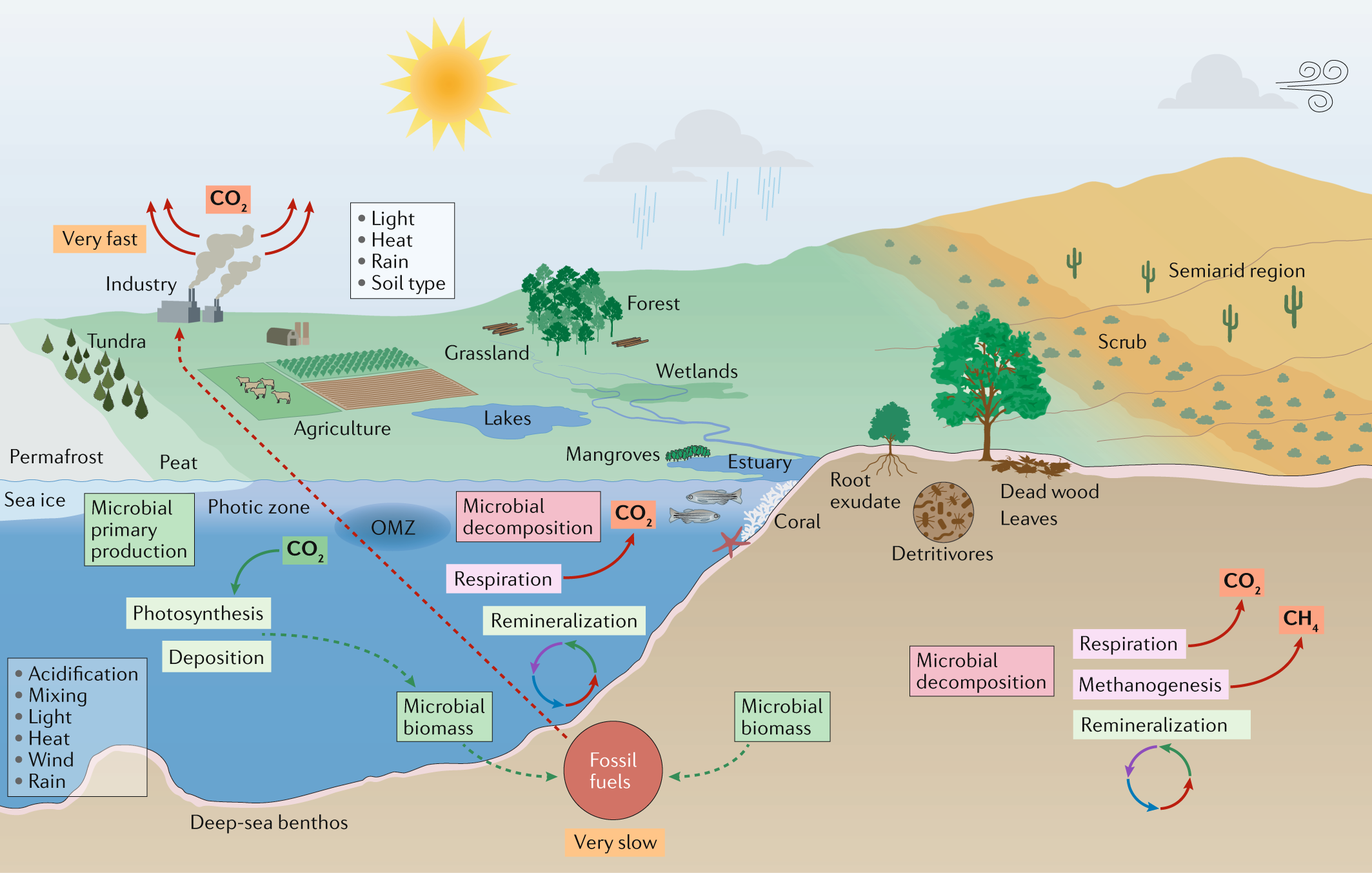
Microorganisms are central to the carbon cycle, which is crucial for regulating atmospheric CO2 levels. Photosynthetic microorganisms, such as cyanobacteria, convert CO2 into organic matter, while heterotrophic microorganisms decompose organic matter, releasing CO2 back into the atmosphere. This process is vital for maintaining the balance of CO2, which is a greenhouse gas.

Nitrogen Cycle

The nitrogen cycle is another area where microorganisms play a pivotal role. Nitrogen is a key component of proteins, nucleic acids, and other essential biomolecules. Microorganisms like rhizobia and cyanobacteria fix atmospheric nitrogen into a form usable by plants. Other microbes convert ammonia to nitrate (nitrification) and nitrate back to nitrogen gas (denitrification), completing the cycle.

Phosphorus Cycle

Microorganisms also participate in the phosphorus cycle, which is essential for the formation of nucleic acids and phospholipids. They help in the solubilization of phosphorus from rocks and organic matter, making it available to plants.

Decomposition and Recycling

Decomposition is a fundamental ecological process that recycles nutrients from dead organisms back into the ecosystem. Microorganisms, particularly bacteria and fungi, are the primary decomposers. They break down complex organic matter into simpler inorganic compounds, which can be reused by plants and other organisms. This recycling is crucial for the sustainability of ecosystems.

Bioremediation

Microorganisms are also used in bioremediation, the process of using biological organisms to degrade environmental contaminants. Bacteria, for example, can break down pollutants such as oil spills, pesticides, and heavy metals, reducing their harmful effects on the environment.

Disease Control and Antibiotic Production

While some microorganisms cause diseases in plants, animals, and humans, others are beneficial. Certain bacteria and fungi produce antibiotics that can kill or inhibit the growth of pathogenic microorganisms. These natural antibiotics have been invaluable in the fight against infectious diseases.

Climate Regulation

Microorganisms also play a role in climate regulation. For instance, the production of methane by methanogenic archaea in wetlands and the oceans contributes to the greenhouse effect. Conversely, microorganisms involved in the carbon cycle help regulate atmospheric CO2 levels, which is a critical factor in climate change.

Conclusion

The role of microorganisms in Earth’s ecosystems is vast and varied. From driving nutrient cycles and decomposing organic matter to bioremediation and climate regulation, their activities are indispensable for the health of the planet. As we continue to explore and understand the microbial world, it becomes increasingly clear that these tiny organisms are the architects of life as we know it. Protecting and preserving microbial diversity is not just a scientific endeavor but a critical step in safeguarding the future of our ecosystems and the planet.
NASA’s Asteroid Reversal Mission: A Hope for Earth Protection

preahvihearhotel.com – In an era where the threats posed by near-Earth objects (NEOs) are becoming increasingly recognized, NASA’s Asteroid Redirect Mission (ARM) emerges as a beacon of hope for the protection of our planet. This ambitious project is not just a testament to human ingenuity and exploration but also a critical step in safeguarding Earth from potential cosmic impacts.

The Asteroid Redirect Mission was conceived as part of NASA’s plan to test and prove the technologies needed for future human deep-space missions while also addressing the issue of planetary defense. The mission was designed to identify a suitable small asteroid or a large boulder on the surface of a larger asteroid, rendezvous with it, collect a multi-ton boulder from its surface, and redirect the asteroid mass to a stable orbit around the moon. This orbit, known as a distant retrograde orbit (DRO), would be a unique testing ground for future human missions to deep space, including Mars.

The primary goal of ARM was to demonstrate the feasibility of capturing and redirecting an asteroid, which is a critical capability for planetary defense. By developing and testing the technologies required to capture and redirect an asteroid, NASA aimed to ensure that humanity would have the means to protect Earth from a potential impact. The mission was also intended to provide scientists with the opportunity to study a primitive asteroid up close, offering invaluable insights into the early solar system and the building blocks of life.

One of the key technologies that ARM was set to demonstrate was the robotic capture of an asteroid. This involved using advanced robotic arms and possibly nets or bags to secure the boulder from the asteroid’s surface. The challenge of capturing and redirecting an asteroid is immense, requiring precise navigation, robust systems for anchoring to the asteroid, and the ability to tow the asteroid to its new orbit.

While the Asteroid Redirect Mission was not without its critics, with some questioning its feasibility and cost, the project represented a significant step forward in the field of planetary defense. It aimed to push the boundaries of what is possible in space exploration and to ensure that humanity is better prepared for the cosmic threats that lurk in our solar system.

Unfortunately, NASA’s Asteroid Redirect Mission was not ultimately carried out as originally planned. The mission concept was proposed during the development of the Space Launch System (SLS) and the Orion spacecraft, but it was later replaced by other initiatives. Despite this, the concepts and technologies developed for ARM have not been abandoned. They have been incorporated into other missions and continue to influence NASA’s approach to planetary defense and deep space exploration.

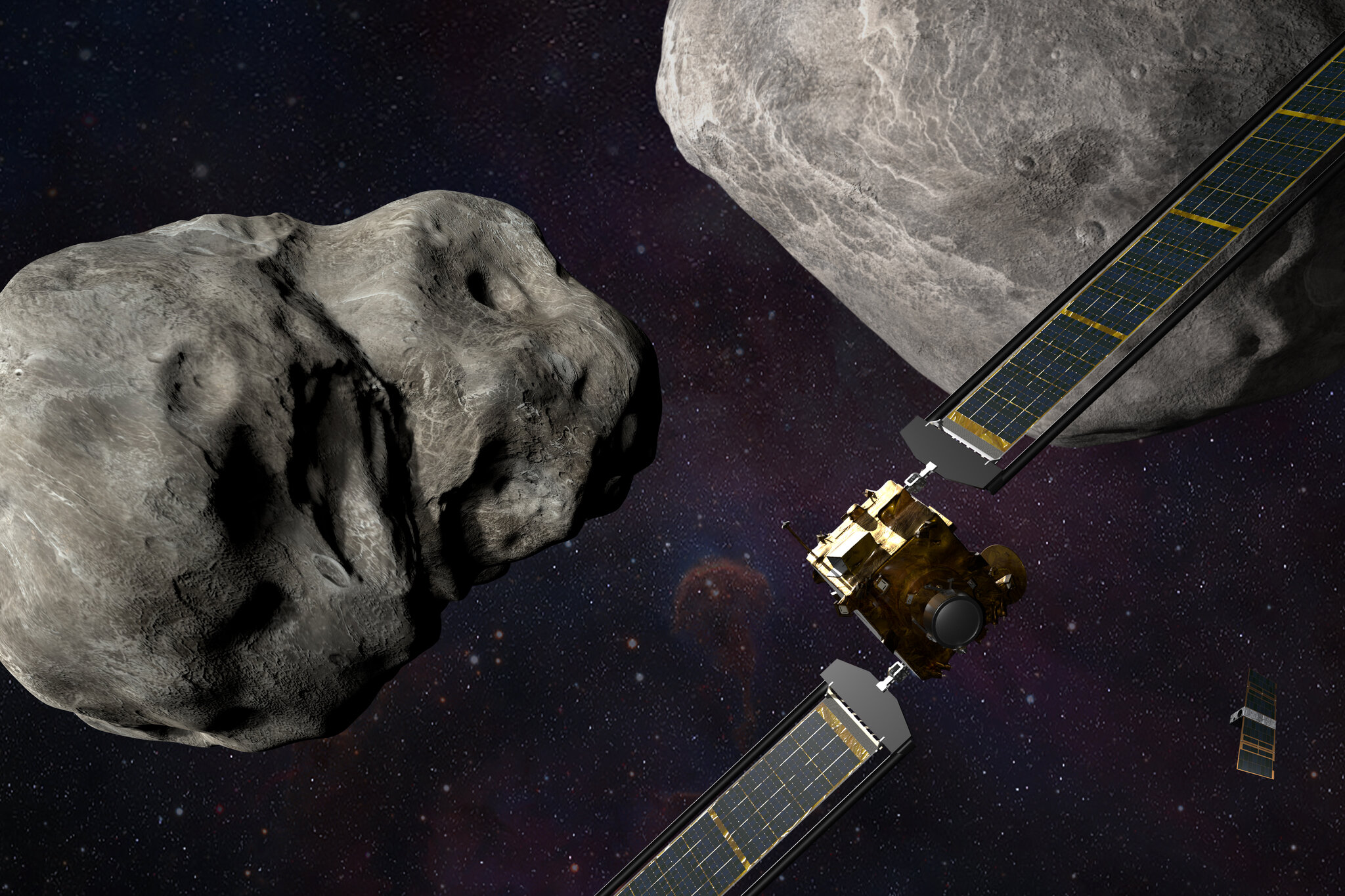
One of the direct outcomes of the ARM concept is the Double Asteroid Redirection Test (DART) mission, which is a planetary defense-driven test of kinetic impactor technology. Launched in November 2021, the DART mission is designed to intentionally crash into the smaller of a pair of asteroids, Dimorphos, which orbits its larger companion, Didymos. The goal is to change the speed of Dimorphos in its orbit around Didymos by a fraction of a percent, demonstrating the kinetic impactor technique as a viable method for planetary defense.

In conclusion, while the Asteroid Redirect Mission may not have come to fruition as initially envisioned, its legacy lives on in the ongoing efforts to protect Earth from potential asteroid impacts. NASA’s commitment to planetary defense remains strong, with ongoing research, technology development, and missions like DART that build on the pioneering concepts of ARM. As we continue to explore the cosmos, the lessons learned from missions like the Asteroid Redirect Mission will be invaluable in ensuring the safety and security of our planet for generations to come.